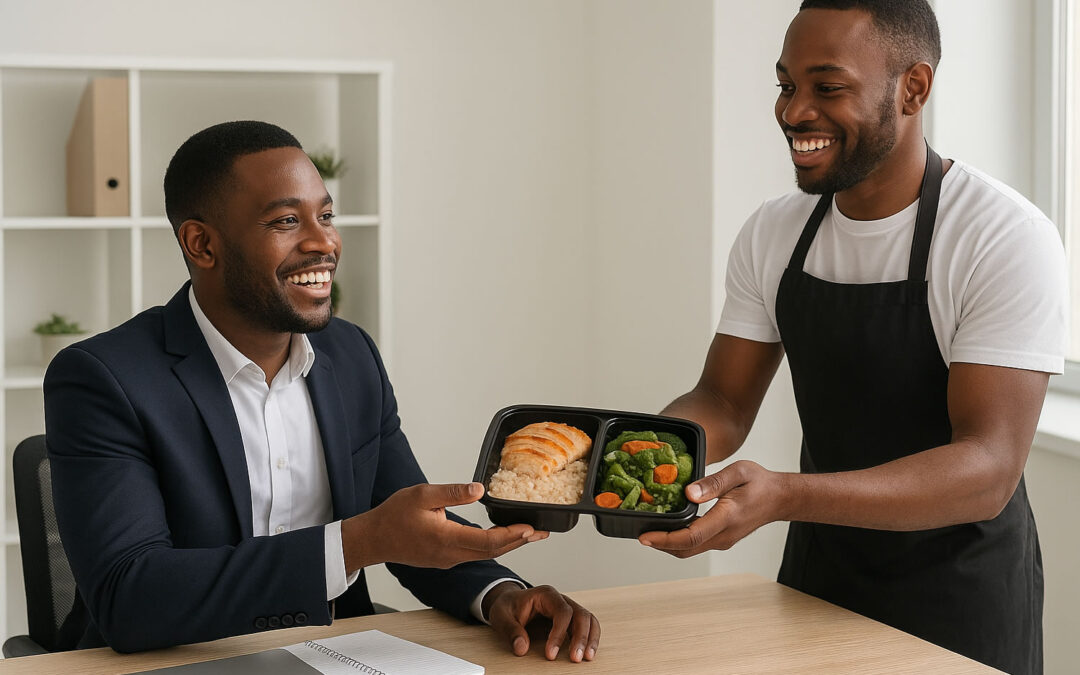
Let’s not waste time. People are tired, traffic is crazy, and cooking every single day is draining. That’s why meal-prep subscription services are blowing up. Think about it, if you could deliver freshly cooked, well-packaged meals to office workers, busy families, or students every week, you’d never run out of demand. Food is not a luxury. Food is survival.
The good thing? You don’t need a big restaurant or fancy setup to start. You can begin right from your kitchen, test with a few customers, and grow gradually. I’ll walk you through it like a friend advising another friend who’s looking for the next hustle. Let’s break this down step by step.
What Exactly Is a Meal-Prep Subscription Service?
It’s simple. Instead of cooking daily and stressing over “what will I eat?”, people pay you in advance to handle their meals for a set period. That could be lunch for five workdays, dinner three times a week, or a full family meal plan for one month.
It’s not the same as a regular buka or restaurant. A buka waits for people to come and buy food plate by plate. You, on the other hand, sell convenience. You cook in bulk, package meals properly, and deliver them on schedule. Customers subscribe, you plan ahead, and money is more predictable. That’s the magic of subscriptions.
Why This Business Works in Nigeria
- Traffic and stress: Lagos, Abuja, PH, name any big city, and people are too stressed to cook daily.
- Cost saving: Eating out every day is expensive. A subscription saves customers money.
- Trust in hygiene: If your food is clean, consistent, and packaged well, people trust you more than random roadside vendors.
- Repeat customers: Once someone enjoys your meals for one week, they’ll likely keep paying weekly or monthly.
Start Small, Don’t Overthink
Many people make the mistake of wanting to set up a “mini restaurant” from day one. Forget that. Start lean. The first step is cooking for just 5–10 people. Use your current kitchen. Package neatly. Deliver. Collect feedback. That’s your pilot test.
If they’re happy, they’ll reorder. If they reorder, you’ve got your first set of loyal subscribers. That’s when you know it’s time to grow.
What You Need to Start
Let’s list the essentials. You’ll be surprised at how affordable this can be.
- Kitchen equipment: You already have pots, pans, spoons, and a stove. Add extra if needed.
- Packaging materials: Disposable food boxes, foil packs, sealing tape, labels. (You can order from Temu, Konga, or AliExpress, my affiliate links are perfect for this).
- Delivery method: Start with either a rider you know or do short-distance deliveries yourself if possible.
- Menu planning: Create 2–3 balanced meals to start with. Don’t complicate it.
- Basic branding: A simple name, logo (can even be text-based), and WhatsApp/Instagram page.
Step-by-Step Launch Plan
Now let’s go deeper. I’ll break down exactly what to do in the first three months.
Stage 1: Validate Your Idea (The first 30 days of your operation)
- Pick 2–3 meals you can cook very well. Example: jollof rice + chicken, yam porridge, spaghetti + turkey.
- Prepare a test menu for the week.
- Message 10 friends, colleagues, or neighbours:
“Hi, I’m starting a weekly meal-prep service. Fresh meals delivered daily, ₦2,500 per plate. Would you like to try for one week?” - Cook for whoever pays. Even if it’s just 3–5 people, that’s enough to validate.
- Collect honest feedback: Was it tasty? Quantity okay? Packaging neat?
Stage 2: Structure Your Operations
- Finalize your menu rotation (e.g., 2-week cycle so people don’t get bored).
- Buy packaging boxes and labels in bulk to reduce costs.
- Set up payments: mobile transfers, POS if possible.
- Start posting your menu on WhatsApp status and Instagram stories daily. Visibility is key.
- Deliver consistently. Never miss a day. In this business, reliability is more valuable than price.
Target by Day 30: At least 10 consistent subscribers paying weekly.
Stage 3: Scale Up (Target 30–50 paying subscribers by day 60)
- Introduce simple subscription plans. Example:
- Weekly Plan: 5 meals = ₦12,000 (₦2,400 per meal)
- Monthly Plan: 20 meals = ₦45,000 (₦2,250 per meal)
- Offer referral rewards. Example: “Bring 2 new subscribers and get 1 free meal.”
- Hire one assistant for cooking or packaging if orders exceed 20 plates per day.
- Approach one office building, give them free samples, and pitch group subscriptions.
Stage 4: Systemize (Target: 50–100 subscribers, ₦500,000–₦1,000,000 monthly revenue potential by day 90.)
- Standardize recipes so meals taste the same every time.
- Create a PDF menu you can share on WhatsApp every Sunday night.
- Hire a rider or partner with one to handle deliveries.
- Introduce loyalty discounts: “Pay 3 months upfront, get 2 free meals.”
- If orders are overwhelming, consider renting a small commercial kitchen.
Let’s Do the Numbers
I don’t like theory, so let’s calculate real examples.
Scenario 1: Small scale (10 customers daily)
- Price per plate = ₦2,500
- Daily revenue = ₦25,000
- Weekly revenue (5 days) = ₦125,000
- Monthly (4 weeks) = ₦500,000
- If food cost per meal is ₦1,500, profit per meal = ₦1,000
- Monthly profit = 10 × ₦1,000 × 20 days = ₦200,000
Scenario 2: Medium scale (50 customers daily)
- Daily revenue = 50 × ₦2,500 = ₦125,000
- Monthly revenue = ₦2,500,000
- Profit margin (after costs) ~ 30–40%
- That’s ₦750,000–₦1,000,000 monthly profit.
See why this business has legs? People will always eat. If you can deliver quality consistently, you’re printing money.
How to Market Yourself
Forget expensive billboards. Here’s what works:
- WhatsApp, post your daily menu, share pictures of clean packaging, and let customers repost.
- Instagram/TikTok, short videos of food prep, customer testimonials, and delivery packaging.
- Office pitches, target staff who hate spending ₦3,500+ daily on restaurant meals.
- Referral system, your happy customers are your cheapest marketing.
Common Mistakes to Avoid
- Overpromising: Don’t take 100 orders when you can only deliver 30. Start small.
- Dirty packaging: Nigerians judge hygiene by how neat the packaging looks. Invest in sealed packs.
- Inconsistent delivery: If you fail once, you lose trust fast. Build a backup plan (generator, extra gas cylinder, standby rider).
- Too many meals: Don’t start with 20 meal options. Pick 3–5 and master them.
Where to Get Tools You’ll Need
To successfully run a Meal-Prep Subscription Service, you’ll need reliable supplies and tools. Essential packaging materials and food containers can be sourced from Temu, or Konga. When it comes to managing orders and scaling, setting up a website or order form with Truehost is a smart move. I’ve gathered all these RECOMMENDED RESOURCES in one place so you can easily access them.
Long-Term Growth
Once you’ve cracked 100+ subscribers, the sky is the limit.
- Expand to family meal plans.
- Create diet-specific plans: keto, weight-loss, vegetarian.
- Partner with gyms, offices, or schools for bulk deals.
- Build an app or simple website for automated ordering.
Here is the Cap
This is not a “get rich quick” hustle. You’ll sweat in the kitchen, deal with delivery stress, and sometimes lose money on spoiled ingredients. But if you keep consistency, keep packaging clean, and keep customers happy, the income potential is massive.
Food will never go out of demand. And in Nigeria, convenience sells faster than anything else. Start lean, test small, grow steady. By this time next year, you could be running one of the hottest meal-prep brands in your city.
If you are tech person, here is a great ebook (pdf) that will teach you step by step on how to start your own business with no money. All you need is strong desire and a laptop with internet connection. You may like this. You can get it here.